
FREE CONSULTATION 703-392-6686

Who Is Liable for a Rear-End Accident in Virginia?
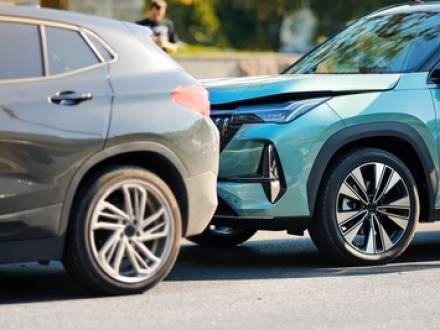 Rear-end accidents are among the most common crashes on Virginia roads. While the driver in the back is often blamed, determining who is legally responsible is not always that simple. Realistically, the rear driver is often liable because they failed to stop in time or followed too closely.
If you're seeking compensation for a crash in 2026, Locklin & Coleman, PLLC can help. Our Prince William County, VA car accident attorneys have over 60 years of combined experience. We’ll investigate your claim to identify every available loss and collect evidence to help you prove who is at fault in your case.
What Does Virginia Traffic Law Say About Following Too Closely?
Virginia law does not set one required number of feet that drivers must leave between vehicles. Instead, Virginia Code § 46.2-816 requires drivers to keep a reasonable and safe following distance based on vehicle speeds, traffic, and highway conditions.
A driver who leaves too little room can cause a crash when traffic suddenly slows. It’s also important to be aware that the safe amount of space changes with road conditions. For example, a driver needs more room to stop on a wet road than on dry pavement.
Is the Driver in Front Ever Responsible for a Rear-End Accident in Virginia?
Fault in any car accident case is based on the actions that caused the collision. For example, a lead driver could contribute to a crash by cutting closely into another vehicle's lane and immediately braking. A front driver may also share fault if they stop suddenly without a reasonable cause, reverse unexpectedly, or enter traffic without leaving enough room for an approaching vehicle.
Evidence showing the movement of both vehicles before impact helps establish who caused the crash. Dashcam footage, witness statements, skid marks, vehicle damage, and electronic vehicle data are all commonly used in disputed car accident cases.
What Evidence Can Prove Fault in a Rear-End Crash in Virginia?
Insurance companies may dispute a rear-end claim when the drivers give different accounts of what happened. Records that can help resolve those disputes include:
- Dashcam or traffic camera footage
- Photos of the vehicles and crash scene
- Statements from people who witnessed the collision
- Testimony from the investigating officer about admissible observations made at the scene
- Vehicle data that records information from around the time of impact
Although the police crash report can help an attorney investigate what happened, Virginia law generally does not allow the official report itself to be used as evidence at trial.
What Losses Can You Recover After a Virginia Rear-End Accident?
Medical expenses and lost income are common recoverable damages in all car accident claims. That may include emergency care, follow-up treatment, rehabilitation, future medical expenses, lost wages, and reduced earning capacity. You may also seek compensation for pain and suffering, emotional distress, and other ways the injuries affect your daily life.
Under Virginia Code § 8.01-243(A), a personal injury action typically must be filed within two years after the claim arises. Different rules can apply in some situations, so waiting until the deadline approaches can put a claim at risk.
How Do Insurance Companies Dispute Rear-End Accident Claims in Virginia?
Virginia has a strict contributory negligence rule, which gives insurers a strong reason to look for statements they can use to place at least some blame on an injured driver. This means that even when the other driver hit you from behind, their insurance company can still challenge your claim.
For example, an adjuster could claim that you stopped without a valid reason or moved into the other driver's lane without leaving enough space. The insurer could also dispute how the crash happened if the drivers give different accounts of the moments before impact. If the adjuster establishes that your own negligence contributed to the crash, you can be barred from recovering compensation.
Part of an attorney’s job is to challenge the adjuster’s claims, present evidence showing how the crash occurred, and push back against attempts to place unsupported blame on you. Attorneys Kevin Locklin and Brian Coleman have backgrounds in insurance defense.
Contact Our Woodbridge, VA Car Accident Attorneys
At Locklin & Coleman, PLLC, we give each client personal attention rather than treating cases like numbers. We offer home and hospital visits, as well as virtual consultations. For a free consultation, contact our Prince William County, VA car accident lawyers or call 703-392-6686.




 |
The Helping Others Heal Scholarship is Now Accepting Applications for the Upcoming College Semester. |

Serious Injuries
Deserve Serious Legal
Representation.
Our attorneys bring decades of experience, careful preparation, and a proven record of results to every case. Contact us today and schedule your free consultation.
FAIRFAX OFFICE
(By Appointment Only)
4041 University Drv., #404
Fairfax, VA 22030
P703-392-6686 Map + Directions
WARRENTON OFFICE
(By Appointment Only)
1 Wall Street
Warrenton, Virginia 20186
P703-392-6686Map + Directions

Contact Us Today

COMPANY
PERSONAL INJURY
CONTACT

Results listed are not a guarantee or indication of future case results.
Manassas Office: 9253 Mosby Str., #100,
Manassas, VA 20110·
703-392-6686


